You're probably looking at a customer message on a Friday afternoon, and the shape of it is familiar. Someone has forwarded a screenshot, a mailbox looks exposed, and your team is deciding whether this is a quick clean-up or the kind of incident that forces awkward questions about response, ownership, and billing.
That's the reason white label SaaS matters to resellers. It's not about adding another logo to a dashboard, it's about deciding whether you want to build security capability in-house, or package it under your own brand and sell it as a managed monthly service. For most UK MSPs, IT support firms, telecom providers, VoIP resellers, cyber consultants, hosting providers, web agencies and SaaS resellers, the commercial answer is obvious, buy specialist capability, keep the customer relationship, and avoid turning your own team into a security operations unit.
The Friday Afternoon That Changed How One MSP Sells Security
The partner on the call doesn't need another platform demo. They need a decision. The customer wants to know whether an exposed password means a reset today, a report tomorrow, or a breach notification clock that starts before the weekend is over.
That's the point where a lot of MSPs realise their current stack isn't the issue, their operating model is. If they try to build the capability themselves, they inherit alert handling, evidence trails, customer comms, and the obligation to explain what happened in plain English. If they resell a broad platform, they often end up with more surface area than their SME customers can use. A specialist white-label service is the cleaner commercial move.
Why this situation keeps repeating
UK cyber exposure isn't a one-off event. The 2025 Cyber Security Breaches Survey found that 43% of businesses reported a breach or attack in the previous 12 months, around 612,000 businesses, with 74% of large businesses and 67% of medium-sized businesses affected, and phishing still the most common attack type at 37% (government survey). That means the “quick clean-up” call keeps turning into a recurring service opportunity.
A reseller who offers white label security services can turn that recurring anxiety into a branded monthly line instead of a one-off support task. The customer gets early warning, the partner keeps the account, and the underlying specialist vendor handles the monitoring infrastructure.
Practical rule: if your team is already worrying about alert ownership before lunch, you don't need more tools, you need a service model.
What White Label SaaS Actually Means for Service Providers
White label SaaS means you sell software under your own brand while another company runs the platform underneath. In practice, that usually shows up in three shapes.
The three commercial structures that matter
The first is the full rebrand. Your logo, colours, domain and customer conversations are front and centre, while the vendor stays invisible. That works when you want to sell a branded monthly subscription and the customer should see you, not the software house behind you.
The second is the multi-tenant partner platform. You manage many end customers under one console, with tenant-isolated data, quotas, delegated admin and usage visibility. This is the format most MSPs and telecom resellers should ask for first, because it fits the reality of multiple clients, one operating team, and strict separation of records.
The third is the OEM-style integration. You embed the vendor capability into your own product with APIs or webhooks, and the original interface never really appears. That's the right shape when you already have a customer portal or service layer and want to add capability without changing the front end.
If you're deciding what to buy, keep it simple. If the goal is to sell dark web monitoring under your own brand as a monthly service, pick the full rebrand or multi-tenant model. If the goal is to enrich an existing platform, use the OEM route.
For a broader view of partner-led selling, the outsourced B2B sales team model shows the same principle, keep delivery hidden, keep the customer-facing offer simple, and let the specialist do the hard work behind the scenes.
Commercial Benefits That Actually Show Up on a P&L
The benefits are straightforward, but only if you treat this as a revenue model rather than a feature pack.
Recurring revenue is the real prize
A monthly subscription converts a one-off sale into an annuity. For a reseller, that only works if the service is easy to explain, easy to renew, and light enough to manage without custom engineering each time a customer signs up. If the offer needs a lot of pre-sales labour, the margin gets eaten quickly.
A sensible reseller approach is to keep the price ladder simple, a starter tier, a standard tier, and a higher tier that includes training or simulations. That gives you room to protect margin while matching different customer sizes and risk appetites. If you need a model for why recurring billing matters operationally, the logic behind revenue split automation for SaaS is useful, because predictable allocation only works when the underlying subscription is predictable too.
Low overhead is what makes the margin real
A white-label service only works if you don't need a security team to support it. The UK managed-service market shows why that matters, only 22% of active UK MSPs reported performing cyber-security-related activities, versus 55% providing cloud-related services (MSP market research). That gap is your commercial opening, but it also shows how thin cyber capability still is inside many partner firms.
Upsell and stickiness come from the same motion
The cleanest upsell is into an existing account, not a new hunting ground. If you already sell IT support, cloud, hosting, connectivity, telecom systems or web services, you can attach monitoring to a conversation the customer already accepts, protecting accounts and reducing exposure. Once the service is in place, every alert becomes a reason to contact the customer, which strengthens the relationship around the core contract as well.
Commercial takeaway: if the service doesn't create a monthly reason to talk to the customer, it won't create monthly revenue for long.
Build Your Own Versus Resell a Specialist Vendor
Most service providers ask the wrong question. They ask whether they can build it, when they should be asking whether they can support it profitably.
The three routes, side by side
| Approach | Time to launch | Operational burden | Best fit for |
|---|---|---|---|
| Build internally | Slow, because you need product, engineering and operational capability | High, because you own alerts, tooling, workflows and support | Larger firms already selling managed security as a core service |
| Resell a broad generic platform | Moderate, but onboarding can be heavy | Medium to high, because the platform often exceeds SME needs | Partners serving larger, security-mature buyers |
| Resell a specialist vendor | Fastest for most resellers | Lowest, if the vendor handles infrastructure and monitoring | MSPs, telecom providers, resellers and consultants who want a simple monthly offer |
The specialist route wins for most UK service providers because the customer conversation is clearer. “Your email address or password may already be exposed” is easier to explain than a conversation about SIEM pipelines, rule tuning or threat intel feeds. That matters because your buyer isn't paying for complexity, they're paying for a sensible answer to a risk they already understand.
Where GoSafe fits
A platform such as GoSafe Dark Web monitoring belongs in the specialist bucket. It's designed for continuous scanning, exposed credential detection, breached domain monitoring and clear alerts, which is exactly the sort of offer a reseller can package as a branded monthly service without inventing its own monitoring stack.
If you want a practical overview of reseller positioning and partner structure, the reseller white label program explained page is worth reading before you decide whether to build, bundle or rebrand.
Technical and Branding Foundations Resellers Should Check
A white-label deal falls apart fast if the platform looks branded but behaves like a shared tool. Your customer notices that immediately, and so do your support staff.
What to inspect before you sign
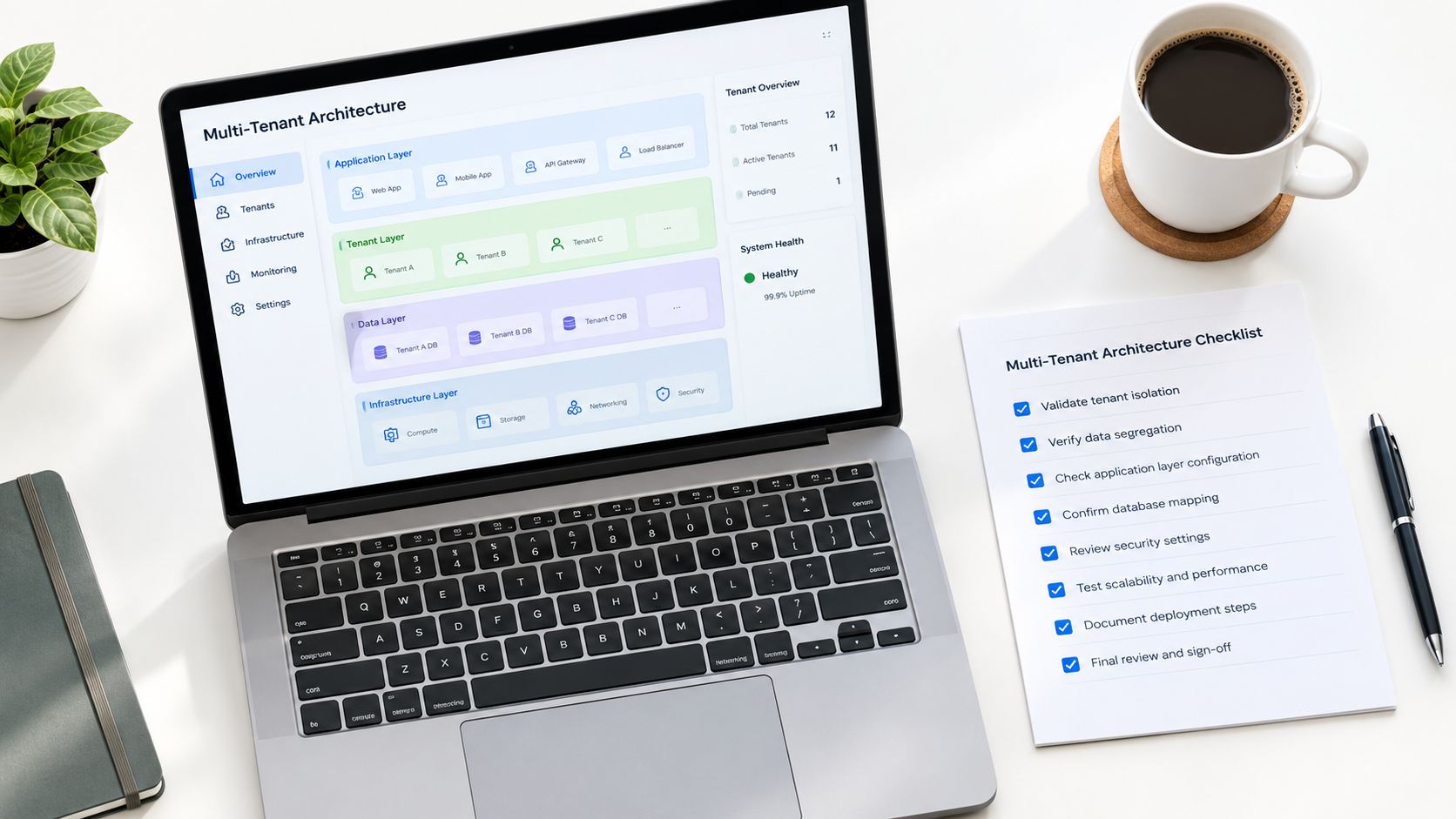
Start with tenancy. You need customer data isolated by tenant, plus delegated administration, partner-level provisioning and customer-level quotas. One console has to manage multiple accounts without blending identities, alerts or evidence records.
Then check the brand layer. Your logo, colours, domain and sender identity should appear on the dashboard, alerts, breach reports and invoices. If the vendor name still dominates the customer's view, you are selling a referral with paint on it.
Alert delivery comes next. Email alone is not enough. Alerts should land in the customer dashboard, in a ticketing workflow, and through webhook or API delivery if the buyer wants them inside their own systems.
Demand evidence and audit trails as well. Timestamped breach records, severity scores, redacted previews and exportable response logs turn an alert into something a client can act on and later defend. That matters in the UK because the ICO expects qualifying personal-data breaches to be reported within 72 hours of discovery, and its guidance on reporting personal data breaches to the Information Commissioner sets that expectation clearly (ICO data security incident trends).
The vendor should own infrastructure reliability. You should own the customer relationship, escalation and commercial outcome. If that split is unclear, walk away.
If you want a practical checklist for commercial and operational setup, the article on dark web monitoring for resellers is a useful next read.
Why Alerts Alone Are Not the Service
A stream of alerts is not a managed service. It's just a list of things that might matter.
The gap between detection and action
If a customer sees an exposed password and no one tells them what to do next, they either ignore the alert or expect your team to fix it for free. That's a margin killer. You need to sell the full remediation loop, alert, investigation, customer action, credential reset or MFA step, and documented closure.
UK data makes that point hard to ignore. The 2025 survey found phishing was the leading attack type, while only 19% of businesses had provided staff cyber-security training in the preceding 12 months (labour market survey summary). That tells you a lot of customers can detect risk, but still won't change behaviour unless the service is built to drive action.
What to report back to the customer
Your customer shouldn't just see exposures. They should see what happened after the alert. Track the following, because these are the numbers that support renewal conversations.
- Time to remediation: how quickly the customer acted after the alert.
- Credential reset completion: whether the exposed logins were changed.
- Repeat exposure rate: whether the same issue keeps coming back.
- Training or phishing-simulation outcomes: if you include staff awareness activity.
A reseller who can show action, not just exposure, is selling security outcomes rather than notification spam. That's the difference between a useful monthly service and a support inbox full of complaints.

Pricing, Margins and a Practical Go-To-Market Sequence
Pricing has to be simple enough for a salesperson to explain in ten minutes. If it takes longer than that, small-business buyers will drift away before the second meeting.
A sensible pricing ladder
Use three tiers. A starter tier fits a monitored domain or mailbox. A standard tier can cover users or seats. A higher tier should include training simulations or extra reporting, because that is where you justify a stronger monthly fee without turning the offer into consultancy.
The true test is margin. You need room for support, onboarding, and a sensible amount of customer success time. Price too close to your underlying cost and you will be working for free every time a customer asks a question.
How to launch without overthinking it
Start with five friendly accounts, not fifty. Pick customers you already know, lead with the simple story about credential exposure, and keep the first conversation short. Then fold the offer into your existing quarterly or monthly service review, so you are not creating a second sales motion.
UK small businesses already buy software as a service, so a branded monitoring add-on is a familiar purchase shape. That matters because your offer should feel like a low-friction extension of an existing service relationship, not a new category that needs a long education cycle.
If you want a practical way to structure a partner launch, join the GoSafe partner network and compare your current service stack against a branded monitoring offer before you hire or build anything.

A Short Decision Framework and the Practical Next Step
Use three filters. First, can you name at least fifty existing customers who would benefit from the offer? Second, are you willing to assign one person part-time to escalations and customer follow-up? Third, do you understand that this is recurring monthly revenue, which is the point and the responsibility?
If two of those three are true, a specialist white-label model is worth piloting. If all three are true, you should move quickly and avoid the usual delay around building internal tooling or trying to turn a generic platform into a security service.
A reseller doesn't need more theory than that. A white label SaaS line works when the offer is simple, the handover is clean, and the customer sees a clear reason to stay subscribed.

GoSafe Dark Web monitoring gives service providers a branded way to detect exposed credentials, breached domains and sensitive data without building a security stack from scratch. If you want to sell dark web monitoring under your own brand and add a monthly security line to your portfolio, visit GoSafe Dark Web monitoring and review the reseller programme next.