You're in a quarterly review with a long-standing customer. You've covered patching, backup checks and their next laptop refresh when the owner asks, “Do you monitor our security as well?” They assume you'll know if an employee's password has been exposed. Your support agreement doesn't necessarily include that visibility.
That's the gap between maintaining systems and monitoring threats. Backups help you recover, and patching addresses known vulnerabilities, but neither tells you that someone's credentials have appeared in breach data. The customer needs a clear explanation of what you monitor, what an alert means and who acts on it.
The commercial opportunity is real, but so is the responsibility. The UK Government's Cyber Security Breaches Survey 2025 found that 43% of UK businesses reported a breach or attack during the previous year.
The best cyber security software for your business depends on how you'll deliver it. These choices prioritise white-label readiness, reseller economics, operational overhead and understandable alerts, while separating credential monitoring from endpoint, identity and recovery services.
1. GoSafe Dark Web monitoring
Best for providers launching a fully branded monitoring subscription. GoSafe is a UK-developed Dark Web Monitoring tool, not a replacement for endpoint protection or backup. It suits MSPs, IT support companies, telecoms and VoIP providers, hosting companies and technology resellers that want a straightforward addition to their existing portfolio.
Our tool continuously scans for compromised email addresses, exposed passwords, breached domains and stolen company data. Clear, simple alerts give business users an early warning when compromised information is discovered, while breach histories and redacted exposure examples help explain what needs attention.
The service is fully white-label. Partners can brand the platform as their own service, sell it under their own company name and retain the customer relationship, without building security tools internally.
How to package and support it
Sell a dark web monitoring service for businesses as a monthly subscription, either separately or alongside IT support, connectivity, cloud services or hosting. Branded customer portals, bulk onboarding and centralised licence management support delivery across your customer base.
- Low operational overhead: There's no complex setup, specialist security knowledge or dedicated security team required to operate the monitoring service.
- Useful customer context: Our dashboard brings together risk scores, breach history, dark web threats and real-time alerts across customers.
- Additional customer value: AI risk scoring, GoPhish Live simulations, DeepCheck AI suspicious-email analysis, password tools, incident-response support and GDPR resources support wider security conversations.
Our service is Cyber Essentials accredited. Pricing isn't publicly listed, so build your proposal around wholesale costs, support scope and the margin you need rather than assuming an advertised retail spread.
Service boundary: Monitoring identifies exposure. It doesn't guarantee that every breach will be detected or replace a defined incident-response service.
For providers assessing dark web monitoring reseller opportunities, the main advantage is a ready-made branded service rather than a development project. Compare top-rated dark web monitoring providers on customer visibility and remediation usefulness, not the volume of records they advertise.
2. Have I Been Pwned (HIBP) Pro

Choose HIBP Pro when you want breach intelligence to feed a service you control. Have I Been Pwned supports customer-domain monitoring, breach and infostealer exposure searches, and API-based integration. Pro's bulk domain management and automated verification are relevant to MSPs managing customer domains.
Its strength is focus. You're buying access to exposure intelligence, not an endpoint suite or a complete branded customer experience.
Budget for the service around the data
An API can support your own portal and ticketing workflows, but it doesn't automatically provide understandable customer notifications, escalation ownership or remediation support. Include development, maintenance and service-desk time in your commercial model.
- Package it as: A managed credential-exposure service, with your own reporting and response process.
- Price around: Subscription capacity, integration effort and the cost of investigating alerts.
- Confirm before committing: Domain verification requirements, API limits, permitted customer-facing use and subscription scope.
HIBP Pro includes k-anonymity email search, while Pwned Passwords can support compromised-password checking. Those capabilities are useful to technical teams, but customers still need an explanation of what a finding means for their accounts.
A historical breach match isn't proof of an active compromise. Your support team should distinguish old exposure from evidence that warrants immediate password changes, session review or further investigation.
Providers that compare data breach scanners should therefore compare the finished service, not just the underlying search results. HIBP is a credible building block when you have integration capability; it's less convenient when you need a ready-made white-label portal.
3. SpyCloud
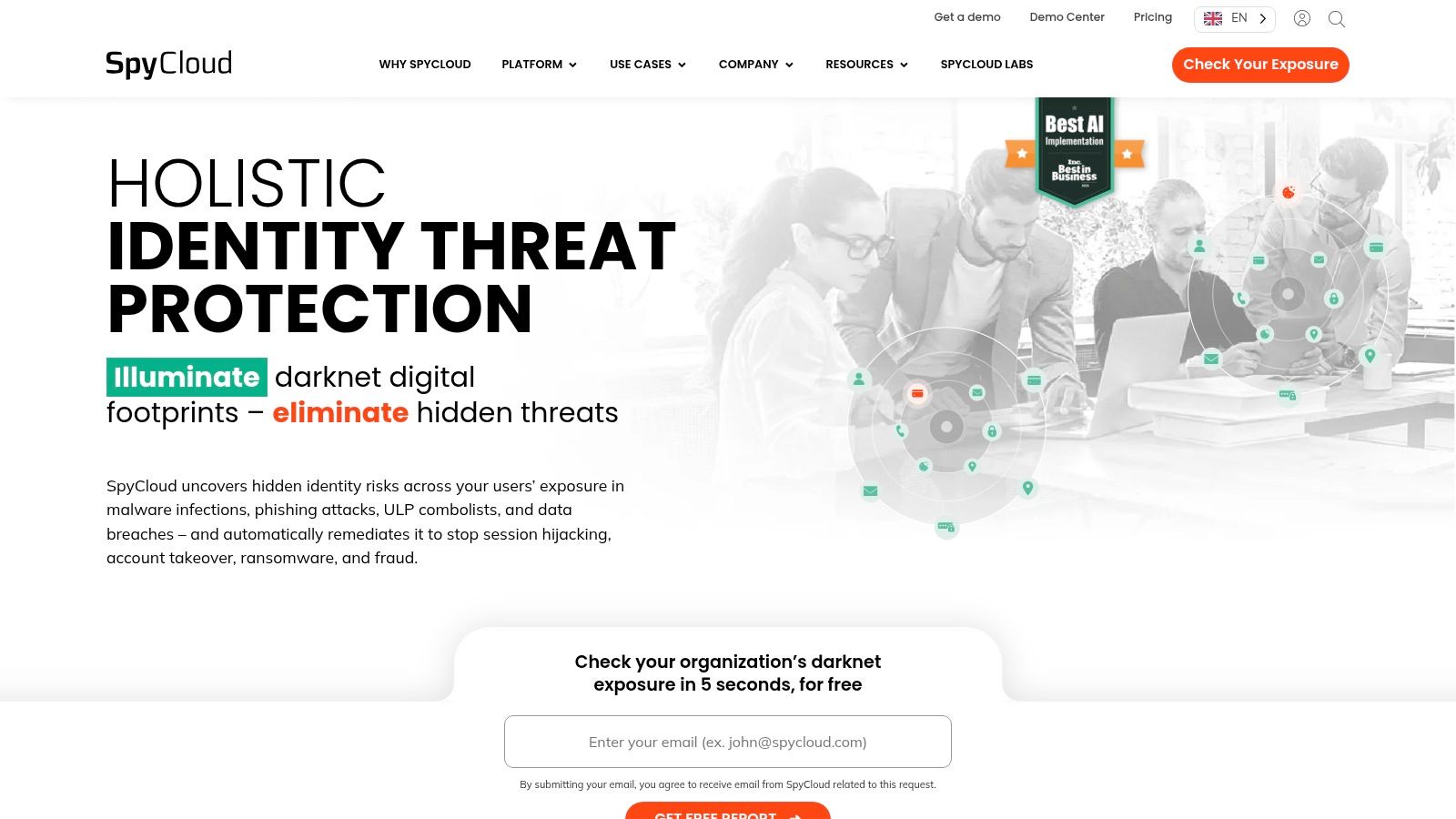
An exposed password and data stolen from a malware-infected device shouldn't enter the same response queue without context. SpyCloud suits providers that can investigate identity exposure and connect it to security operations, rather than forwarding breach notifications without additional context.
SpyCloud focuses on identity-threat intelligence drawn from breaches, phishing and malware-related exposure. Its integrations with SIEM, SOAR, endpoint and identity systems make it relevant to MSSPs, managed detection and response providers, and larger security teams.
Don't sell richer intelligence unless someone is responsible for interpreting it and carrying out the resulting actions.
Sell investigation capability, not another feed
A practical package would combine identity-exposure monitoring with account investigation and agreed remediation. For example, suspected infostealer exposure may justify checking the affected device and active sessions, rather than stopping at a password reset.
SpyCloud offers partner models relevant to multi-client delivery, with commercial structures that can depend on clients, seats or usage. Pricing is quote-based, so model the intelligence cost alongside analyst effort and integration maintenance.
Its main trade-off is operational depth. A provider selling basic IT support may not need the same intelligence or workflow sophistication as an MSSP.
Don't assume that a partner agreement includes a fully white-label customer portal. Confirm branding, customer access and reporting rights separately, then decide whether customers need a vendor portal at all.
Best fit: Providers selling a supported identity-security outcome. For a simple, branded monthly alert service, the implementation and investigation requirements may be more than your customer base needs.
4. Constella
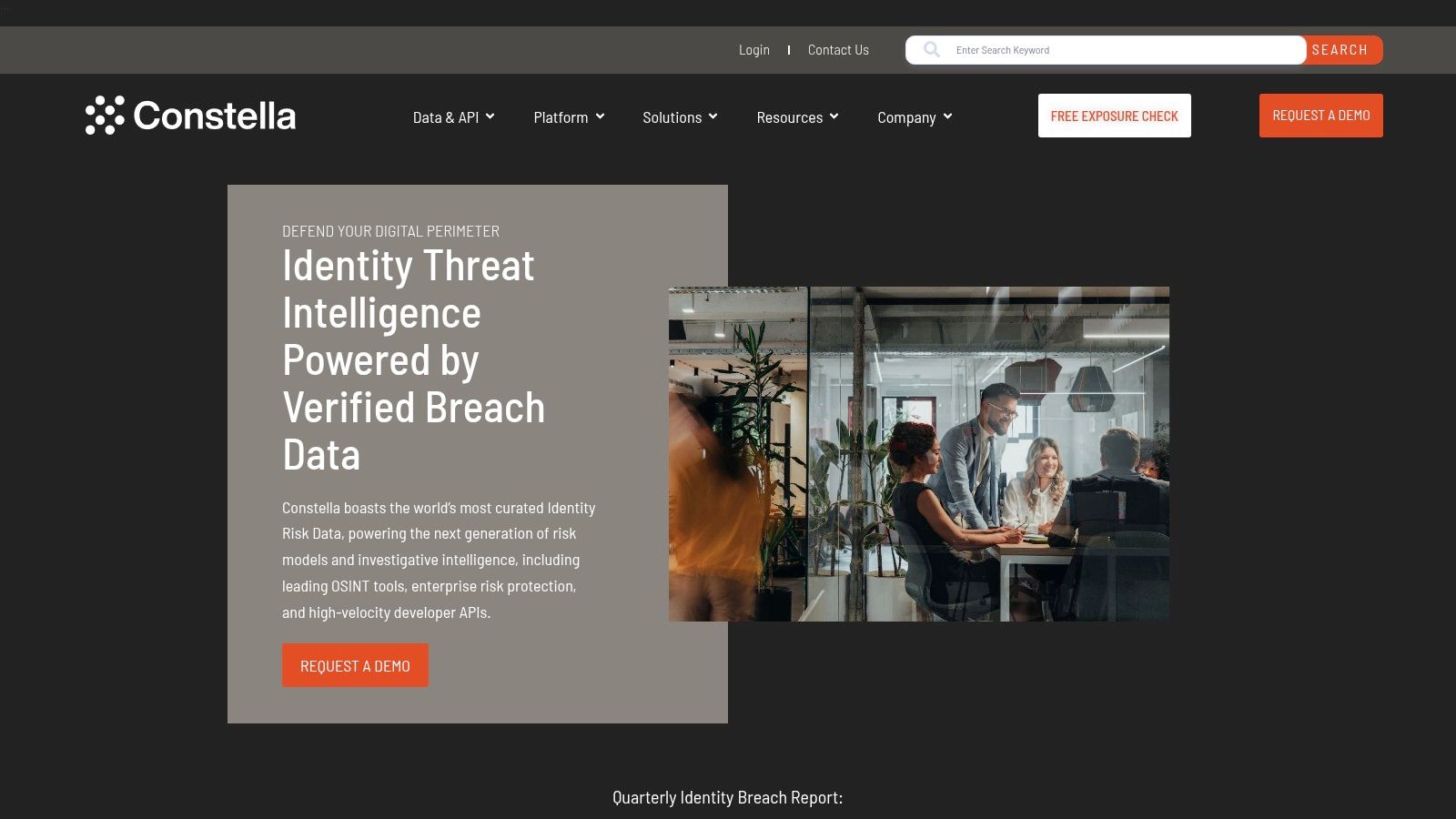
Constella becomes relevant when the conversation extends beyond employee passwords. A customer concerned about executive exposure, impersonation or misuse of its brand needs a different service from a business that wants breached-domain alerts.
Constella combines identity-risk intelligence with exposed-credential monitoring, digital-risk protection and investigative capabilities. Its product material describes an MSSP-focused domain-monitoring portal, which makes it worth considering for multi-customer delivery.
That broader scope can support a higher-touch service. It can also create support work that a basic monitoring subscription won't cover.
- Package by outcome: Separate credential monitoring from executive protection, brand-risk investigation and takedown-related work.
- Define ownership: State who validates a finding, contacts the customer and coordinates any external response.
- Confirm the channel terms: Establish current branding rights, tenant management, customer access and deployment arrangements before selling it under your name.
Keep the initial offer narrow
Say a customer asks you to monitor its company domain and managing director's exposure. Agree which identities and assets are covered, what evidence you'll provide and which response tasks require separate approval.
Constella's investigative breadth is useful when your team can deliver that service. It's unnecessary overhead if your customers only want understandable credential alerts and practical next steps.
Public pricing isn't shown in the available product material, so request commercial terms against a defined scope. When you compare white-label dark web monitoring options, distinguish an MSSP portal from a platform you're explicitly entitled to brand and resell as your own.
5. ESET PROTECT and the ESET MSP Program
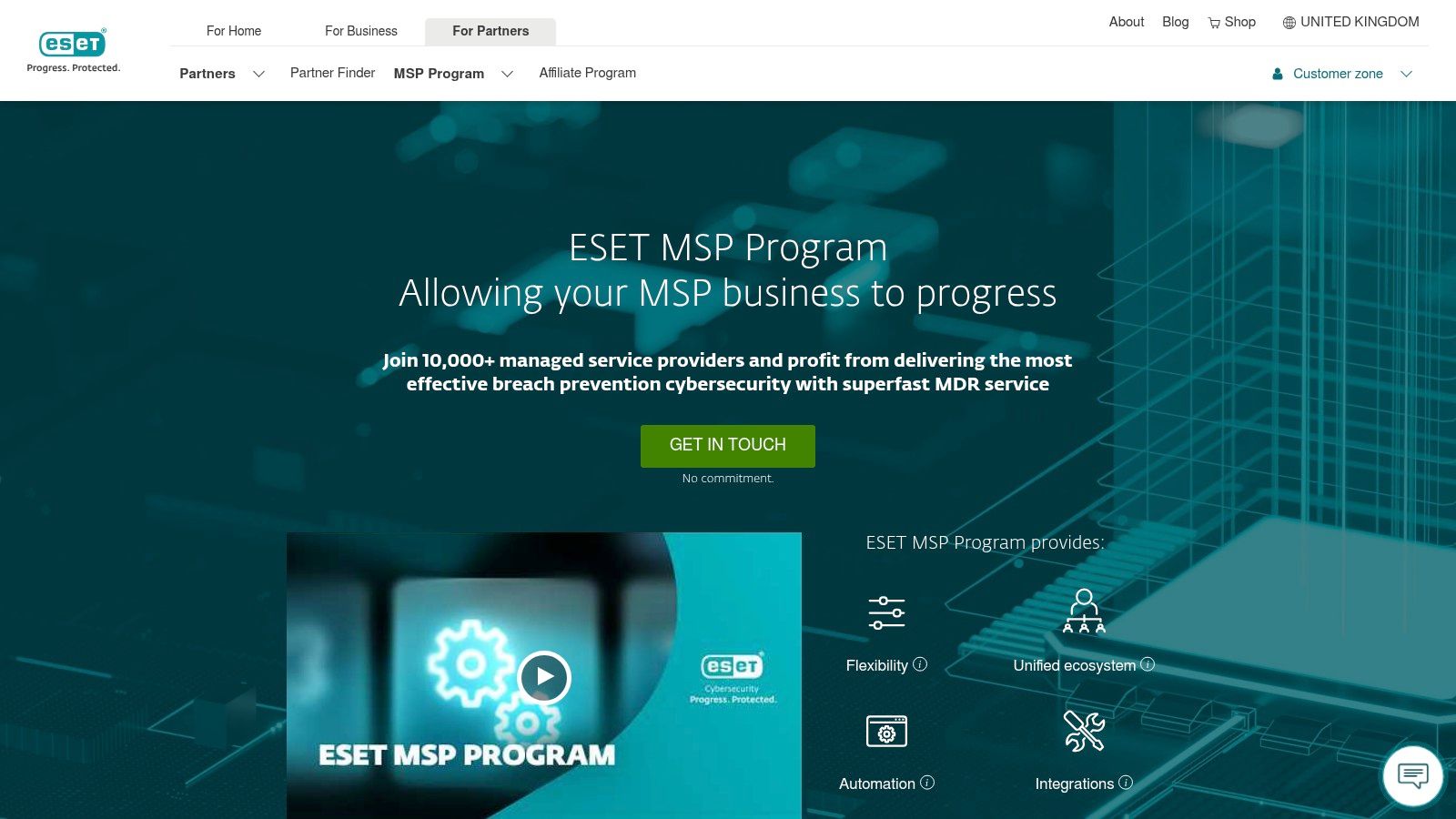
ESET belongs in the endpoint layer of your offer. It protects and helps you manage customer devices; it shouldn't be presented as an alternative to a dedicated dark web monitoring service.
The ESET UK MSP programme offers daily billing, monthly invoicing and seat-count adjustments, alongside a unified management console and RMM and PSA integrations. That billing structure matters when customers regularly add or remove devices.
ESET PROTECT provides centralised management, with endpoint protection and XDR capabilities depending on the licences and modules selected. Don't quote a broad security outcome until you've checked which functions your proposed licence includes.
Make device management part of the price
An endpoint subscription needs more than a licence margin. Allow for deployment failures, policy configuration, exclusions, stale devices and investigation of detections.
- Customer package: Managed endpoint protection with clearly defined monitoring and remediation responsibilities.
- Commercial fit: Usage-based licensing that can accommodate changing customer estates.
- Channel distinction: A vendor-branded management environment, not an assumed fully white-label breach-alert portal.
UK MSP and ISP or telecoms partner routes make ESET relevant to different provider types. Detailed partner costs and discounts still need a commercial enquiry.
The useful pairing is endpoint protection plus credential-exposure monitoring. One helps protect the device; the other helps identify business credentials that have surfaced outside the customer's environment.
Keep reporting joined up without pretending the products do the same job. A customer should understand what you've protected, what you've detected and what action remains outstanding.
6. Huntress

The limiting factor in a managed security service is often who investigates the alert. Huntress addresses that problem through managed security products with human SOC support, including managed endpoint detection and response.
Its portfolio also includes managed identity-threat protection for Microsoft 365 and Google environments, managed SIEM and security-awareness training. Product scope matters, so distinguish the services you're buying rather than treating the portfolio as a single included bundle.
The operational case is clear: you can add specialist investigation support without trying to build every capability internally. That doesn't remove your responsibility for customer communication or agreed remediation tasks.
Commercial test: Price the service around the work your team still owns, not the assumption that a managed vendor removes every support obligation.
Define the hand-off before onboarding
Agree who receives urgent notifications, who can authorise containment and who communicates with the customer. Make sure your support agreement reflects those decisions.
Huntress is not a dark web monitoring tool or a white-label breach-alert portal. Treat it as a managed detection and response layer alongside exposure monitoring, with its own operating environment and escalation process.
Pricing can be tied to endpoints, identities or data sources, depending on the product. Partner pricing isn't public, and direct-purchase minimums shouldn't be assumed to match channel terms.
Best fit: MSPs that need help investigating threats and supporting response. It's less directly suited to a hosting company or web agency seeking only a low-management branded monitoring subscription.
The margin calculation should include onboarding, customer liaison and any response activity outside the managed product's scope.
7. Acronis Cyber Protect Cloud

A customer asks whether you can restore its systems after an attack. That's a recovery question, and Acronis Cyber Protect Cloud is relevant because it combines cybersecurity, backup and recovery within a service-provider platform.
Acronis Cyber Protect Cloud supports central management of multiple customers and licensing models based on protected workloads or data volume. It suits providers that want to package protection and recoverability together.
The advantage is a connected service portfolio. The trade-off is that broader coverage introduces more licensing choices, policies and operational responsibilities.
Build the bundle around recoverability
Start with the workloads the customer depends on, then define backup coverage, restoration responsibilities and the protection modules included. Don't sell a bundle based solely on the number of features available.
- Package it as: Managed protection and recovery, with explicitly scoped backup and restoration services.
- Price it around: The selected licensing model, protected data or workloads, and your delivery costs.
- Support it with: Backup-failure investigation, restoration testing and documented customer responsibilities.
There isn't a fixed public MSP price to apply across every deployment. Costs depend on the services and commercial model selected, so test your margin against different customer workloads before standardising a package.
Acronis doesn't replace dedicated credential-exposure monitoring or a dark web alerting portal. It can support recovery after an incident, while exposure monitoring gives you another source of warning and investigation context.
Treat its provider console and customer-facing arrangements separately from white-label rights. Confirm the branding available under your agreement rather than assuming that every part of a managed service can carry your identity.
How the leading options compare for MSPs and resellers
The right fit depends on what you plan to sell and support: a branded monitoring service, a separate customer portal, or a broader security and recovery package. Pricing also varies in how much is publicly stated, so check the provider's current terms before setting customer rates.
| Item | Best for | Pricing model | White-label or reseller portal | Core focus |
|---|---|---|---|---|
| GoSafe Dark Web monitoring | MSPs and resellers offering branded monitoring | Wholesale pricing available on enquiry | Fully white-label platform with customer portals and reseller model | Dark web and domain monitoring, with additional cybersecurity tools |
| Have I Been Pwned (HIBP) Pro | MSPs monitoring customer-domain breach exposure | Plan-based pricing; confirm current tiers with the provider | No built-in customer-facing reseller portal; API supports integrations | Breach and infostealer exposure data |
| SpyCloud | MSSPs, MDR providers, and larger organisations | Quote-based; varies by solutions and accounts protected | Partner models available; confirm portal and branding options | Identity-threat intelligence and compromised credentials |
| Constella | Providers monitoring identity, executive, and brand risks | Not publicly listed; contact sales | MSSP domain-monitoring portal described; terms should be confirmed | Digital-risk protection and identity-risk investigations |
| ESET PROTECT and the ESET MSP Program | MSPs managing endpoint security across customers | Flexible usage-based billing; daily billing and monthly invoicing | MSP programme with multi-client console; white-label terms not specified | Endpoint protection and XDR |
| Huntress | MSPs seeking managed security operations and SOC support | Unit-based; partner pricing not public | Channel-first partner model; not a white-label breach-alert portal | Managed endpoint, identity, and SIEM security |
| Acronis Cyber Protect Cloud | MSPs bundling cybersecurity, backup, and recovery | MSP licensing based on workloads or data volume | Service-provider platform with multi-customer management; white-label terms not specified | Cybersecurity, backup, and recovery |
For a provider selling under its own brand, GoSafe's fully white-label model supports a branded customer service, while HIBP Pro's API supports integration rather than a built-in reseller portal. The distinction affects onboarding, customer experience and the support your team must provide.
Treat monitoring as one part of the service stack. Dark web and breach monitoring can surface exposed information; endpoint tools focus on devices, while backup and recovery services address restoration. Compare each option by the work it adds to your team, not just its feature list.
Building a Security Line-Up That Fits Your Customer Base
The best cyber security software for a reseller isn't necessarily the product with the broadest feature list. It's the combination your customers will understand, your team can support and your pricing can sustain.
Start with your existing service. An MSP already managing devices can add credential-exposure monitoring alongside ESET or Huntress, while a provider managing backups can place it beside Acronis. A telecoms reseller, hosting provider, web agency or SaaS reseller may find a straightforward branded monitoring subscription a more realistic starting point than an analyst-led security service.
Match the service to your delivery capacity
White label dark web monitoring gives you a clear proposition: monitor business domains, alert customers when compromised credentials are discovered and explain the next step. Businesses may already have exposed credentials without knowing it, but don't imply that every alert proves a current intrusion.
Use a monthly subscription with an explicit support boundary. Include alert explanation and agreed guidance, then distinguish chargeable investigation or incident-response work where appropriate.
- Brand ownership: Confirm whether you're selling your own branded service or access to a vendor's portal.
- Sustainable economics: Include licensing, onboarding, alert handling and customer communication in your margin calculation.
- Useful evidence: Prefer exposure context and actionable guidance over notifications that leave customers guessing.
- Operational fit: Decide whether you need simple monitoring, integration-ready intelligence or a managed investigation team.
For dark web monitoring for MSPs, our fully white-label model removes the need to build the customer portal and monitoring tools internally. You retain the customer relationship and can add recurring revenue security services alongside the support, cloud or telecoms products customers already buy.
Start with a defined customer group and a service description your sales and support teams can both explain. View the GoSafe Reseller Programme to explore the commercial model, book a demo and offer dark web monitoring under your own brand.
GoSafe Dark Web monitoring offers continuous credential-exposure monitoring, clear alerts and fully white-label delivery for service providers building a monthly security offer. Visit GoSafe Dark Web monitoring to learn how it fits alongside your endpoint, identity and recovery services, and explore launching it under your own brand.